Ecommerce SEO Checklist for Pakistani Online Stores
A good ecommerce SEO checklist covers a fast mobile store, clear categories, unique product pages, clean technical setup, helpful content, good links, and tracking. Work through them in that order, because each step makes the next one more effective. Start with the basics before you pay for anything advanced.
What Is Ecommerce SEO?
Ecommerce SEO makes your online store easy for Google to find, understand, and show when shoppers search for the products you sell. It covers your product pages, category pages, site structure, speed, and the technical setup behind them. The goal is more visitors who are ready to buy, not just more visitors.
Why It Matters for Pakistani Stores
Pakistani shoppers use their phones first. A 2024 report from DataSparkle, cited in the Pakistani press, found that over 80 percent of internet users in Pakistan access the web through smartphones. That means your store is judged on a small screen, often on a slow connection, and shoppers compare you with marketplaces and other stores in seconds. Appearing in search results saves you from paying for every visit.
How It Differs From Regular SEO
Regular SEO often focuses on a few service pages and some articles. Ecommerce SEO has to manage hundreds or thousands of product pages, filters, variations, and out-of-stock items without creating duplicates or thin pages. It also needs product-specific details such as price, stock, and reviews. The same principles apply, but the scale and the technical risks are larger.
The Ecommerce SEO Checklist
The ecommerce SEO checklist has seven parts: a fast mobile store, clear structure and category pages, strong product pages, clean technical setup, helpful content, good links, and tracking. Start with a quick SEO audit to see which of these are weakest on your store today, then fix them in order.
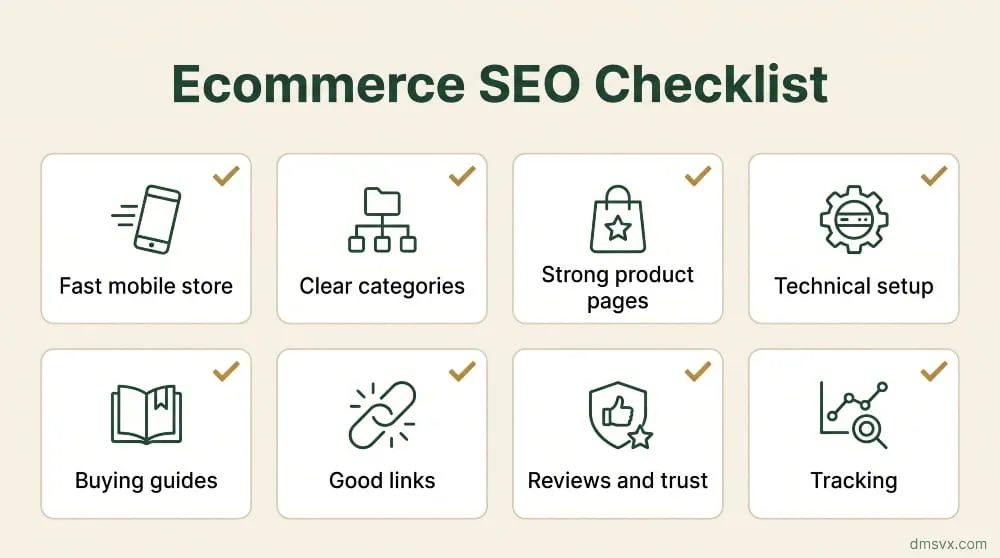
Fast, Mobile-Friendly Store
Your store should load quickly and be easy to browse and buy from on a phone. Compress product images, remove unused apps or plugins, and test your key pages on a mobile connection. Make buttons large enough to tap, and ensure checkout works smoothly. A slow store loses shoppers before they see a single product.
Clear Structure and Category Pages
Group products into logical categories that match how people search, such as “men’s kurta” or “wireless earbuds”, and give each category its own page with a short helpful introduction. Keep the path from the homepage to any product to a few clicks. Category pages are often your best chance to rank for broader searches, so do not leave them as bare lists of products.
Product Pages That Convert
Every product needs its own page with a clear title, a unique description, good images, price, stock status, and reviews. Don’t copy the supplier’s description, because hundreds of stores use the same text. Many shoppers in Pakistan expect delivery details and cash-on-delivery options, so state them clearly. Strong on-page SEO makes each page easy for shoppers and search engines to understand.
Technical Setup: Indexing, Duplicates and Filters
Make sure Google can crawl and index your important pages and isn’t wasting effort on filter, sort, and search-result pages. Use canonical tags to point duplicates to the main version, keep an up-to-date sitemap, and add product structured data so price, availability, and ratings can appear in results. Decide what to do with out-of-stock products instead of simply deleting them. This is the area where store owners most often need technical SEO help.
Content That Helps Buyers Choose
Buying guides, comparisons, and answers to common questions help shoppers decide and bring in visitors who are still researching. Write about how to choose a product, what to look for, and how to care for it. Link from these guides to the relevant category and product pages so the traffic leads to a sale.
Links and Off-Page SEO
Links from relevant, trusted websites help your store rank, and a few good ones beat many weak ones. Good sources include supplier and brand pages, local business listings, news mentions, bloggers who review your products, and your own social profiles. Avoid cheap bulk links. If you want help earning good links, see our off-page SEO work.
Tracking and Reporting
Set up Google Search Console and Google Analytics so you can see which searches bring visitors, which pages sell, and where shoppers leave. Track orders and revenue from search separately from other channels. Without tracking, you cannot tell whether your SEO work is paying off.
How to Optimize a Product Page
To optimize a product page, give it a clear title with the product name and key details, a unique description written for buyers, sharp compressed images, accurate price and stock information, customer reviews, and links to related products. Each page should target one main search and its close variations.
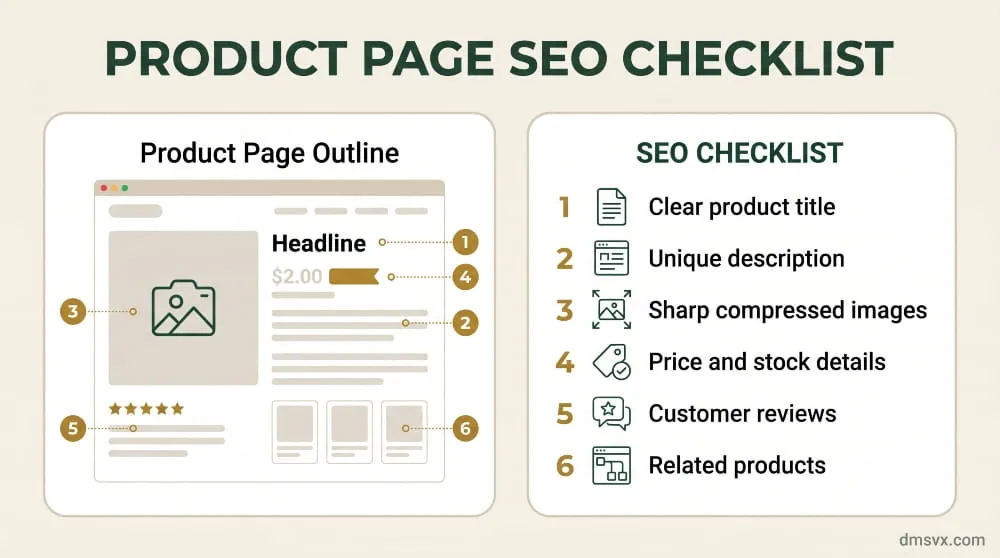
Start with the title: include the product type and the details shoppers search for, such as brand, model, size, or color, and keep it readable. Then write a description that answers real questions about material, use, size, delivery, and returns. Add descriptive file names and alt text to images. Show reviews if you have them, because they add fresh content and build trust. Finally, link to related products and the parent category so shoppers and search engines can move through your store.
Which Platform Is Best for Ecommerce SEO?
The best platform for ecommerce SEO is the one you can run well, because all the main platforms can rank if set up properly. The differences mostly come down to how much control you get and how much technical work you have to do yourself.
Shopify
Shopify is quick to set up and automatically creates a sitemap and a clean, basic structure, which suits owners who want to launch fast. You have less control over some URL patterns and technical details, so some fixes need workarounds. If you are on Shopify, our Shopify SEO page explains our approach.
WooCommerce and WordPress
WooCommerce on WordPress gives you more control over structure, content, and technical settings, but it relies on good hosting and well-chosen plugins to stay fast. It suits owners who want flexibility and plan to publish a lot of content. Our WordPress SEO work covers the setup and maintenance.
Other Platforms
Magento, BigCommerce, and custom-built stores can rank well, but they usually need a developer’s help for technical SEO. If you are choosing a platform now, check how easily you can edit titles, descriptions, URLs, redirects, and structured data before you commit.
Your Own Store vs Daraz and Other Marketplaces
Selling on Daraz or another marketplace gives you access to shoppers who are already there, but you do not own the customer relationship or the page. Your own store lets you build your brand, collect customer details, and rank on Google for your products. Many Pakistani sellers use both.
On a marketplace, optimize your listing titles, images, descriptions, and ratings, because these affect how shoppers choose. In your own store, SEO helps people find you directly on Google, without marketplace fees. If you need quick sales while your store builds visibility, Google Ads can send shoppers to your best products in the meantime.
Common Ecommerce SEO Mistakes
The most common ecommerce SEO mistakes are copying supplier descriptions, leaving category pages empty, letting filter pages get indexed, using slow images, deleting out-of-stock pages without a plan, and not tracking results. Each one wastes effort or splits your ranking power across duplicate pages.
Two more are worth watching. Stuffing a product title with every possible keyword makes it hard to read and does not help. And ignoring reviews means missing both trust and fresh content. A free marketing audit can show which of these mistakes your store has right now.
DIY or Hire Help?
You can handle many ecommerce SEO tasks yourself, such as writing unique product descriptions, compressing images, asking for reviews, and setting up tracking. Bring in help when you have a large catalog, technical problems you cannot fix, or no time to build content and links. Look for a team that audits first, explains its plan, and reports on sales, not just rankings.
Our ecommerce SEO services in Pakistan cover audits, fixes, content, and links for online stores, and our case studies show how we report results.
Frequently Asked Questions (FAQ)
What Is Ecommerce SEO?
Ecommerce SEO improves your online store so it ranks higher on Google when shoppers search for your products. It covers product and category pages, site structure, speed, and technical setup, and aims to bring in visitors who are ready to buy.
How Long Does Ecommerce SEO Take?
Ecommerce SEO usually takes a few months to show steady results, and longer for competitive products. Technical fixes and page improvements can show results sooner, while rankings for broad terms take longer. A good provider will set milestones so you can check progress.
Do I Need SEO If I Sell on Daraz?
Yes, if you want to build your own brand or sell beyond the marketplace. Daraz listings depend on the marketplace’s own search, while your own store needs SEO to appear on Google. Many sellers use marketplace listings for quick sales and SEO to build a store they own.
How Many Keywords Should a Product Page Target?
A product page should target one main search and a few close variations, written naturally into the title, description, and headings. Trying to cover many unrelated terms on one page weakens it. If two products need different searches, give each its own page.
Is Shopify or WooCommerce Better for SEO?
Neither is better by default, because both can rank well when set up properly. Shopify is faster to launch and simpler to manage, while WooCommerce gives more control and flexibility. Choose the one you can maintain well, and that fits your content and budget.
Get a Free Marketing Audit for Your Store.
The quickest way to see where your store stands is to have us review it before you spend anything. Ask DMSVX for a free store audit, and you will get a clear view of what to fix first, with no obligation to continue. When you are ready, contact us, and we’ll walk you through the findings.
Want Results Like This for Your Business?
Let's talk about what's actually possible for your industry and city.
Keep reading